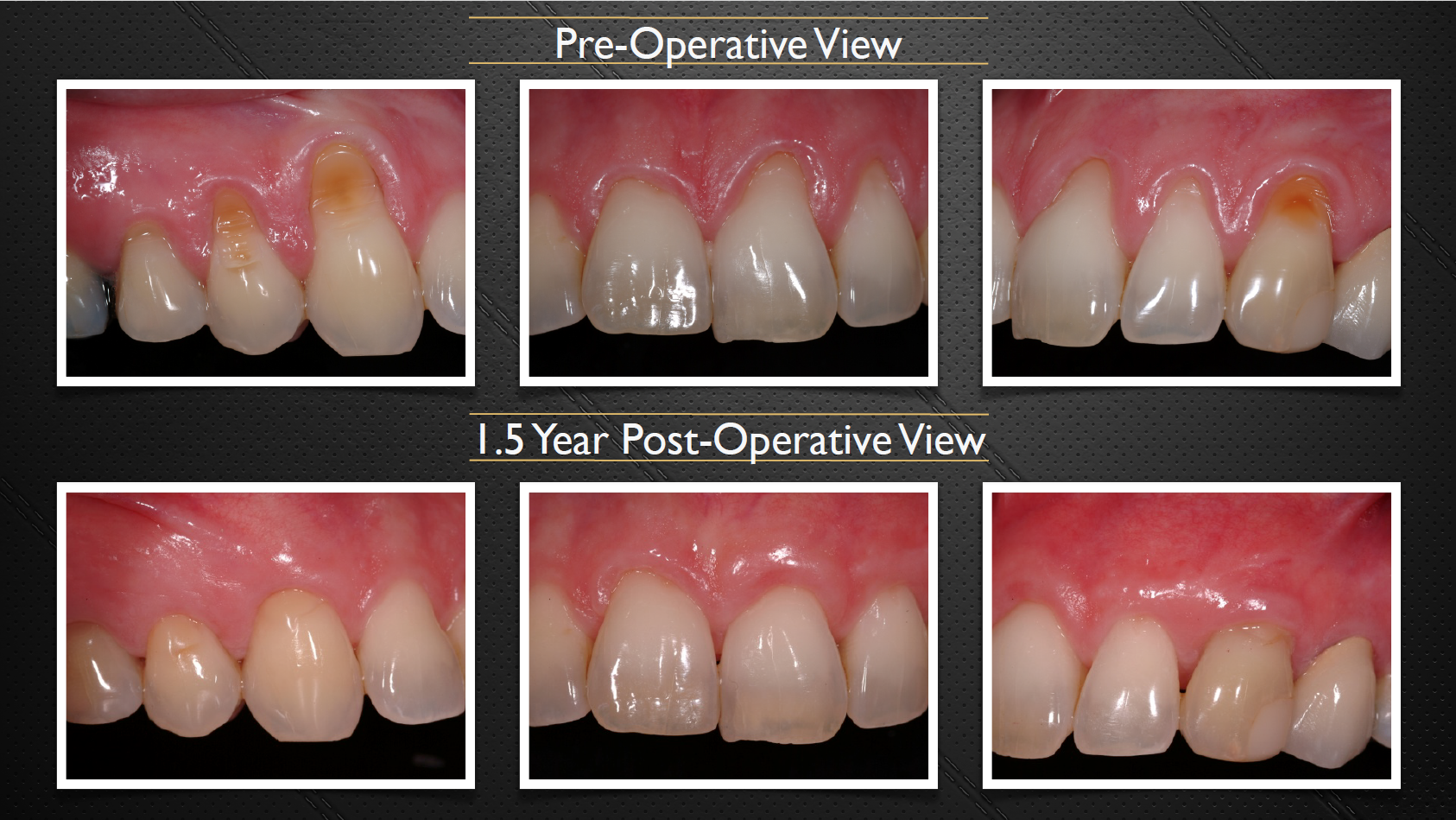
The case presentation focuses on soft tissue reconstruction in the anterior esthetic region using acellular dermal matrix grafting techniques. Initial preoperative photographs demonstrated gingival recession, deficient keratinized tissue, and asymmetry of the gingival margins around anterior teeth.
The accompanying educational article, titled “Acellular Dermal Matrix Tissue Grafts,” discusses correction of insufficient zones of keratinized tissue before esthetic, reconstructive, and implant procedures using acellular dermal grafting materials. The article emphasizes the role of soft tissue augmentation in improving esthetics and periodontal stability.
Sequential postoperative photographs taken 1.5 years after treatment demonstrated:
- Improved gingival margin levels
- Increased keratinized tissue volume
- Enhanced soft tissue symmetry
- Better root coverage and esthetic blending
- Long-term tissue stability in the treated region
The case highlights the effectiveness of acellular dermal matrix grafting for periodontal plastic surgery and esthetic soft tissue rehabilitation.